Rich and frothy
Discontent in the bubble economy

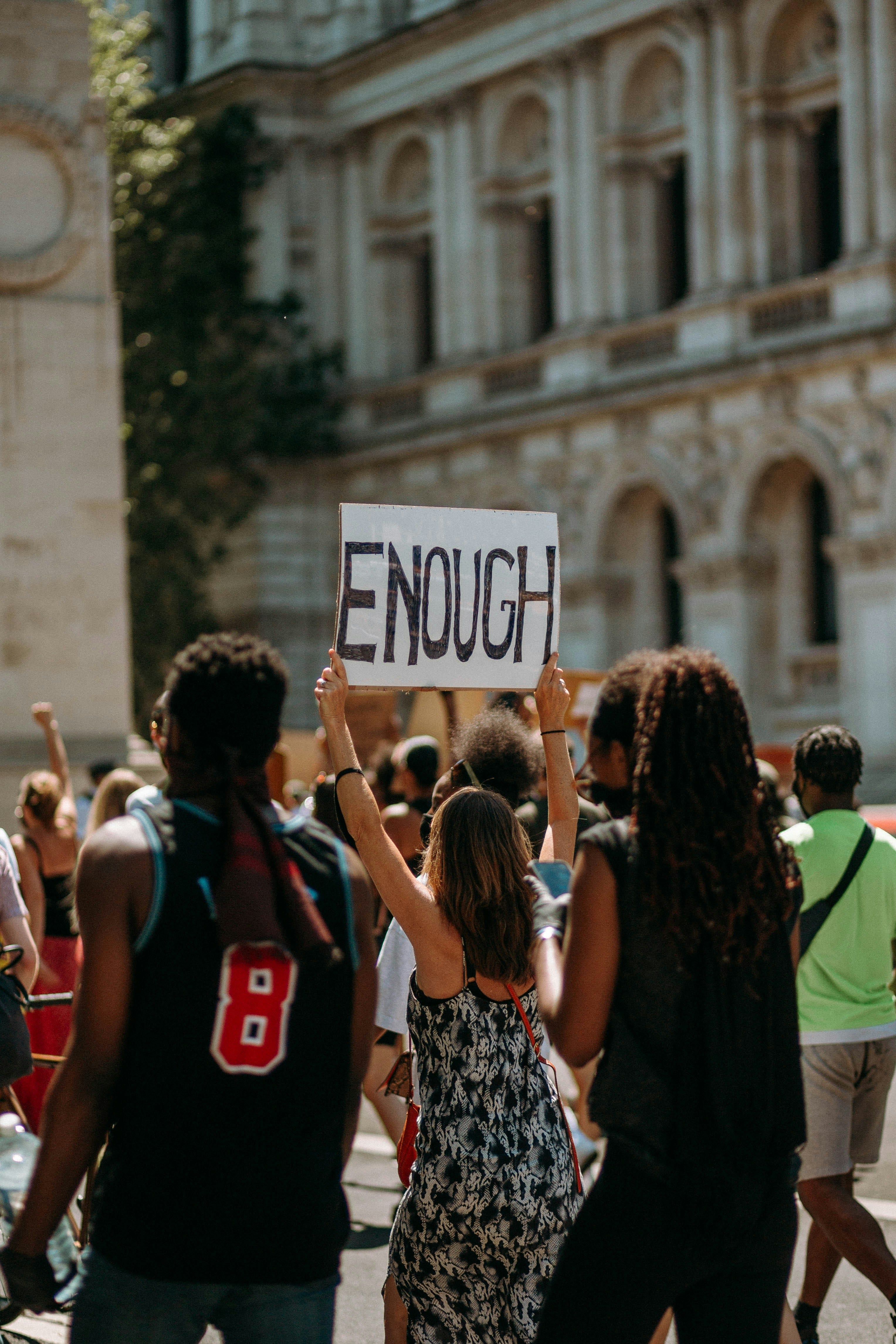
Photo by Liam Edwards on Unsplash
Hello,
Welcome to Known Unknowns, a newsletter that is long billionaires and short bonds.
Some people really hate rich people
The Manhattan Institute gala was last week (it was very nice), and outside, a small group of people awaited us to protest wealth. They did not have any specific or coherent grievances; they just really hate rich people and wanted to express that—which is their right.
It would be wrong to totally dismiss them because there is lots of anger at the wealthy these days. You might think Americans would take pride that our economy, education system, and institutions produced the richest people on the planet. They did this by coming up with innovations that made the world safer, the middle class richer (but not nearly as rich), and better off. In Europe, wealth is usually dynastic; in America, almost all of our billionaires are self-made. I think that’s pretty great, but that’s not a popular position these days. Somehow the narrative is becoming that their wealth is stolen and made at the expense of other people. So much for the American Dream.
The anger and resentment are starting to scare me, and I reckon it will only get worse. Stirring up anger at the wealthy is now how many politicians deflect responsibility for their failures—this never ends well. I am an AI optimist; I think it will make the world a better, richer place, but the process will probably exacerbate wealth inequality. The winners will get very rich from their innovations, and the losers will fall further behind. We don’t have a good way to deal with that, so expect politicians, influencers, podcasters, streamers, or whatever attention merchant to stir up even more anger and spread economic non-sense.
What can we do? The Democratic solution is wealth taxes—take all that ‘excessive’ wealth so they can do what they want with it. This idea, like rent control, is catching on. A punitive wealth tax has a good chance of passing in California. It’s pretty bad, not just for the California economy and our national psyche, but it is also frustrating for me personally. I have spent the last 10 years doing all I can to explain why wealth taxes are bad. You may want more redistribution, but this is not the way to do it. I have good arguments; I wrote articles, I won high-minded debates with intellectuals (I still maintain Yanis Varoufakis sounded like a Stalinist). But I still lost the narrative.
Now I realize it was never about economics, making people more prosperous, or even an optimal distribution of resources. Many prominent economists have admitted as much; they say, “Sure, it’s a bad tax that makes no sense from an economic perspective, but rich people being rich is the problem because they have too much power—and power is bad. They can use their power for bad things: influence the government, ensure an uncompetitive market, etc.”
Maybe that’s true. But a wealth tax is not the answer to power concentration either. It does not break up power; it just transfers it to Ro Khanna. It makes the government more powerful and less accountable—at least Elon Musk has to answer to shareholders. Give me one example of a government that appropriated wealth to disempower its citizens and it ended well.
The Democrats may think taxing the wealthy until they are not so wealthy anymore is the answer. The Trump administration has another idea: just let the wealthy transfer their money directly to the poor. Trump accounts for children are already being seeded by Michael Dell and his wife. Now they may allow for direct stock donations from other billionaires.
It is a pittance compared to the tax system or our philanthropy industry, but it is a new model for redistribution. There is declining trust of nonprofits too, and giving money directly can be more effective—though it also means more risk for the individuals, but that also means upside risk and a stake in the economy, both good and bad.
I am not sure it will be enough. Uncertainty breeds easy scapegoats, and we face lots of it.
Are bonds the real bubble?
Stocks reached record highs last week, again. It’s feeling a little frothy, eh? I totally believe the economy has years of positive growth and productivity ahead of it, but even if AI (and everything downstream of it) turns out to be as big a deal as electricity, that’s only about 2% real growth for the next 100 years. And that’s electricity—it was a very big deal. I know some tech CEOs literally think their work is as important as harnessing the power of fire. They need to get a grip. AI and all of computing technology will change the course of humanity, but fire? I think electricity is already pretty ambitious. And don’t forget we have an aging population and an enormous debt problem. 2% real growth does not go that far, since it already has to contend with those two headwinds.
It makes me wonder…are bonds the real bubble? We have so much debt and not enough growth, even with AI. I know, everyone has been asking that for years. They don’t call betting against bonds the “widowmaker” for nothing. Our debt was a problem when we had zero rates too. But there is evidence that convenience yields—what investors pay to have safety and liquidity—have shrunk, or could be zero by some estimates. After all, bond prices fell with all the news around tariffs and war. US bonds are no longer the single destination for the flight to safety. Bond buyers aren’t big central banks anymore, but foreign private investors looking for yield.
And, oh yes, we have also put Europe on notice that they will have to pay for their own defense (and they are even older!), so the market for low-risk bonds is about to get more crowded. It does seem like this time things are different—or maybe it was never different to begin with, because all along markets had their limits. US debt is not that special after all, never was.
But I don’t believe in bubbles. I believe in efficient markets. Still, it’s not great, and a reckoning in credit is much worse than a stock correction.
Until next time, Pension Geeks!
Allison
Agree with you 100% on the wealth tax. But are shareholders really able to hold Musk accountable? The SEC & the EPA have had no luck
"Tax the rich"? No surprise. See President Obama's debate comment in response to the ABC reporter when President Obama acknowledged higher marginal rates on capital gains would reduce, not increase federal revenues: "
CHARLEY GIBSON: All right. You have, however, said you would favor an increase in the capital gains tax. As a matter of fact, you said on CNBC, and I quote, “I certainly would not go above what existed under Bill Clinton,” which was 28 percent. It’s now 15 percent. That’s almost a doubling, if you went to 28 percent.
But actually, Bill Clinton, in 1997, signed legislation that dropped the capital gains tax to 20 percent.
OBAMA: Right.
GIBSON: And George Bush has taken it down to 15 percent.
OBAMA: Right.
GIBSON: And in each instance, when the rate dropped, revenues from the tax increased; the government took in more money. And in the 1980s, when the tax was increased to 28 percent, the revenues went down.
So why raise it at all, especially given the fact that 100 million people in this country own stock and would be affected?
OBAMA: Well, Charlie, what I’ve said is that I would look at raising the capital gains tax for purposes of fairness.