Who is Laffing now?
Maybe throwing in your lot in with graduate students wasn't such a good idea and other bad risky decisions

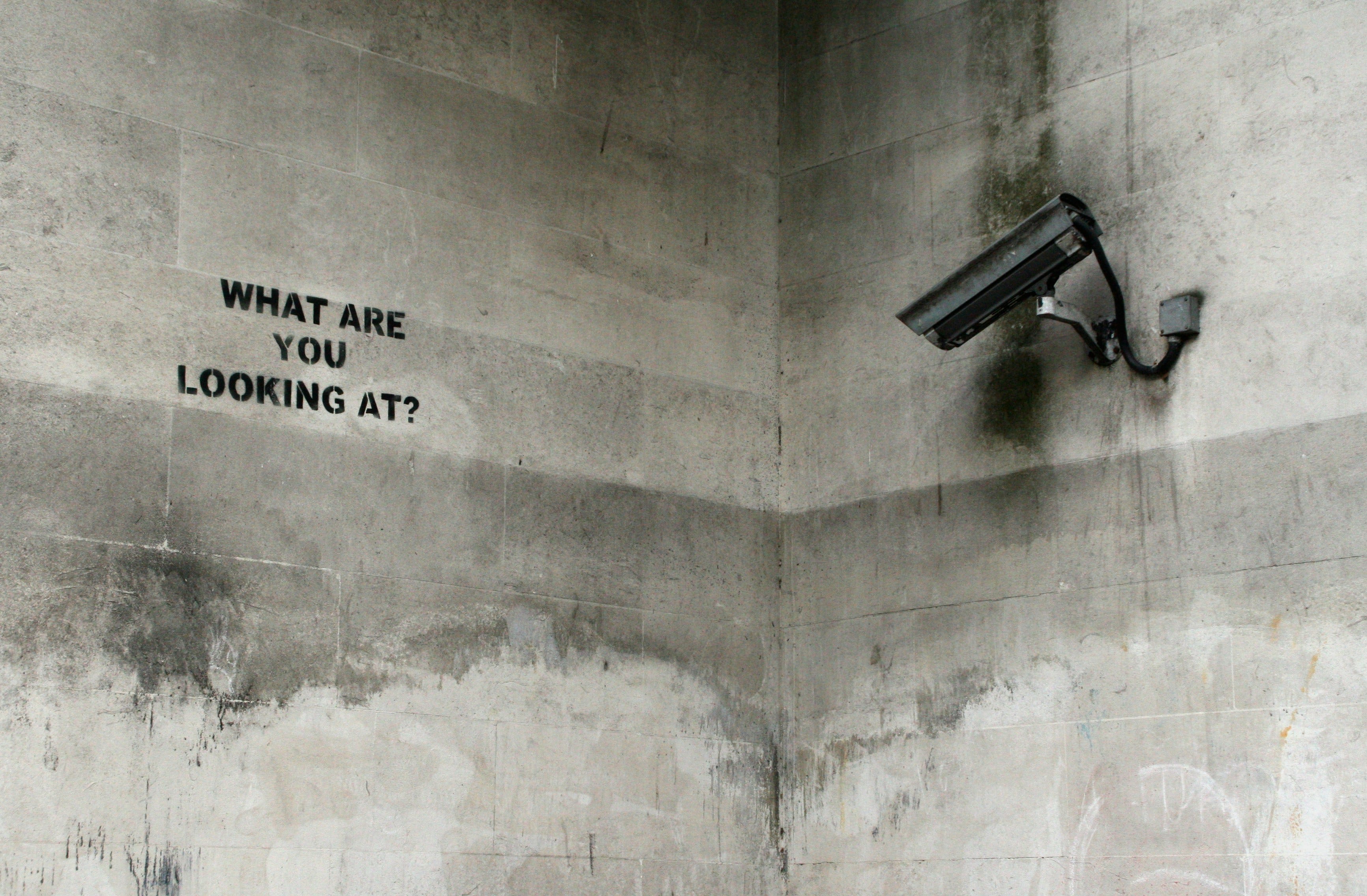
Photo by Niv Singer on Unsplash
Hello,
Welcome to Known Unknowns, a newsletter where you can generalize my opinions from ESG to fine art.
It doesn’t scale
I’ve had a varied career. It started with intensive economic training, but also many years in journalism, policy, industry, and whatnot. One thing I’ve observed about some non-economists is an inability to understand how to generalize economic results. For example, one paper finds that a small increase in the minimum wage during an economic boom didn’t impact employment — and this is taken to mean minimum wages don’t have any adverse impacts, so they figure it’s fine to increase it to $30 (nearly the median wage in New York).
Or I’ve heard many policy makers and journalists say they find the Laffer curve hysterically funny. They can’t believe anyone would ever believe that lowering taxes could increase growth and ultimately increase tax revenue. I agree that if you have a 38% marginal tax rate, decreasing it to 35% probably won’t increase revenue. But come on — it hits somewhere. If you had 150% taxes no one would work, and you’d see an increase in revenue if you lowered that rate. The Laffer curve is a thing; the question is what point on the curve are you at?
But this is not how policy makers are thinking about it. They’ve generalized that because people don’t change their behavior much for relatively low and small changes in tax rates, we can try a 5% wealth tax, jack up income taxes well above 50% — and they do this at the state level. This is in a world where it is much easier to move because of remote work. Odds are the Laffer curve impact kicks in earlier at the state level and with a wealth tax.
Union’s existential moment
I was a graduate student when UAW first tried to unionize us. At the time I thought it was insane. The costs for us were large, and it seemed like two very different cultures. I could see why it was appealing for UAW — they were losing manufacturing workers, and idealistic young graduate students who believe the world owes them more money than their labor is worth seemed like just what they needed. No one listened to the economics graduate students. The anthropologists and their ilk were so enamored with the idea of unions that they fought for years and eventually did manage to unionize.
Now it seems UAW may be the one to regret that decision. Columbia graduate students want to strike over nearly doubling their stipend, the university’s (even tenuous) ties to Israel, and the right to protest unencumbered by university rules on time and place. The problem is you can’t strike (and get all the union money to support the strike) over political positions. UAW realizes this is a problem — it may mean the students lose their union status or be put into receivership. It’s also a bad look, and unions have become yet another institution that once had public sympathy but has been captured by political issues people either don’t care about or find actively offensive.
UAW decided to join ranks with the most political and out-of-touch population in the country rather than do something about fewer manufacturing jobs. They could have taken a hard look at their model, changed it, played a constructive role in a major technological change that will disrupt labor markets, and reasserted their relevance. Instead, they threw their lot in with anthropologists with poor job prospects.
Who could have seen trouble coming?
More ill-advised decisions
These are strange times. On the one hand we hear young people are afraid to date or even leave the house. But they also have an affinity for sports gambling and crypto, two very risky activities. I think there is a connection there. Many people argue they take these long-shot risks because the economy has so little to offer them they may as well go for broke. Surveys suggest this is their thinking. But that’s not true — we constantly confuse the fact that being young is hard with the idea that it is harder than before. Yes, there are new challenges, but some challenges other generations faced don’t exist anymore. Yes, it is harder to get an entry-level job compared to the unusually tight labor market a few years ago, but it is not that much worse than it’s been historically.
The weird risk disconnect is probably due to a few reasons. One, we have access to all these new markets — and that’s new. Two, being young with few financial obligations is the time to experiment and learn about investing. Three, we are in what was (who knows now) a bull market where risky assets look good and many young people don’t know anything else. And finally, not taking productive risks (for a variety of non-economic reasons) may mean people take ill-advised risks just to feel alive. But the narrative that the economy has nothing to offer people under 30 is neither productive nor true, and it is enabling some bad choices.
Contemporary art prices are crazy
I also wrote about the reveal that Banksy, the British street artist, is a middle-aged man from Bristol. The news expected to increase the value of his work because of greater transparency and predictability, but I doubt it. These aren’t stock options. Anonymity and making the art covertly were a big part of the work. Without that, he is just another guy complaining about capitalism while making lots of money to protest it — like most contemporary art. The illegality and anonymity are what made it interesting and authentic. Otherwise, you have all the edge of an HR training video. But that’s the problem with contemporary art: what makes it interesting and valuable may not hold up over time.
It is kind of like ESG funds. You get trends, people decide that making a statement about whatever is in fashion makes something — art, a stock fund, whatever — more valuable than it really is. But then the tide turns, people decide they don’t want to pay more for electricity because Larry Fink said so, and prices come back to earth.
I am not against trends — it can be a fun hobby, it can make you feel edgy and good about yourself. But don’t count on it as an investment strategy.
If you are in New York this week
I am debating Tim Wu tomorrow on whether we should break up big tech.
Until next time, Pension Geeks!
Allison
Would like to attend Allison, but will definitely take a rain check. Oh, and that anthropology grad probably should have become a plumber or a millwright.
Hi Allison, how do you think about Bitcoin/crypto in the context of ESG Funds, contemporary art, and whatever is in fashion that makes something trendy?