
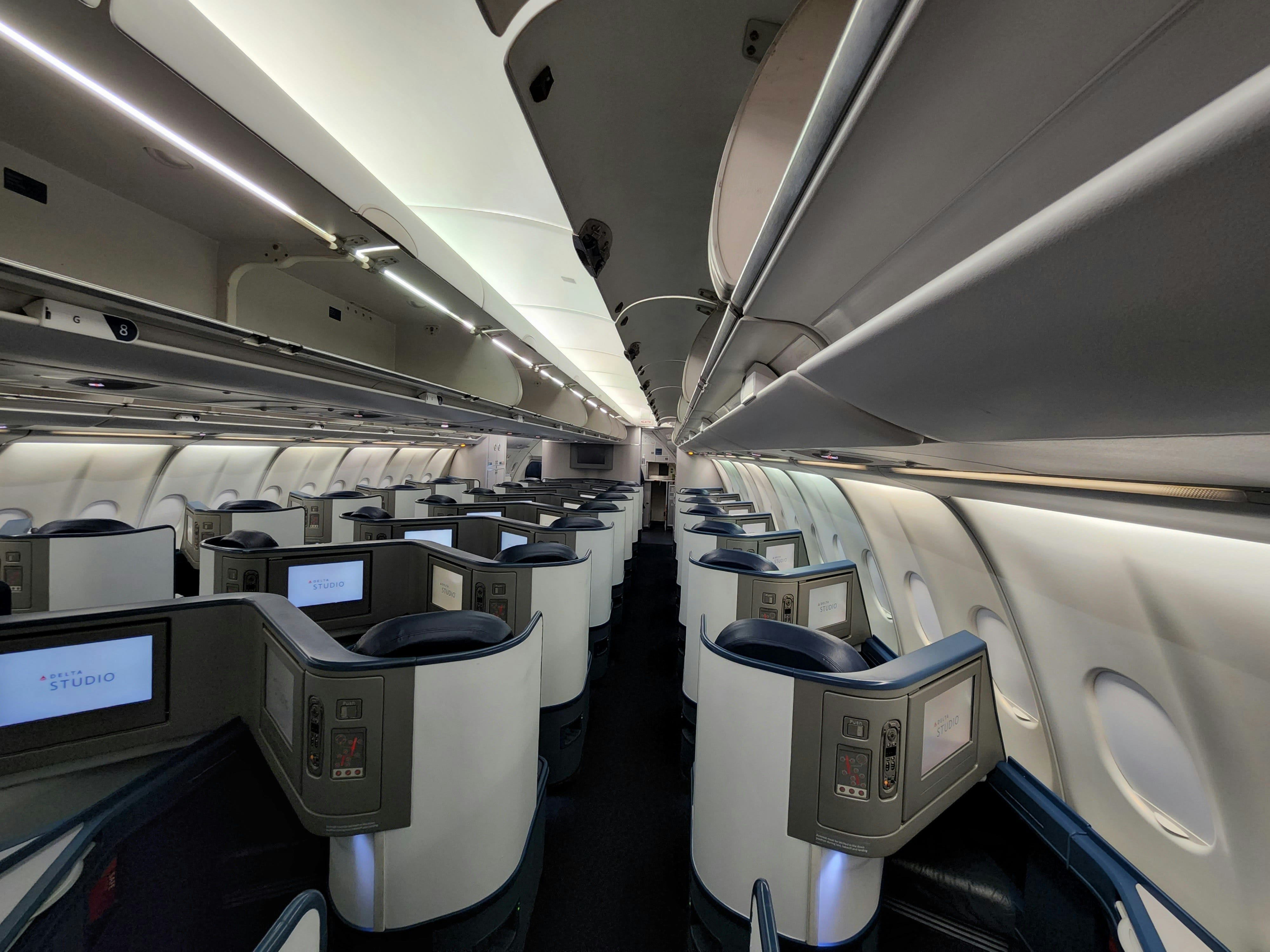
Photo by Benjamin Nelson on Unsplash
Hello,
Welcome to Known Unknowns, a newsletter that is just happy to be in business class, even if there is no ice cream.
We all live in Basic Business now
Fans of capitalism are not having a great moment. And we do have to contend with the fact that yes, free and open markets not only relieved billions from poverty, they improved wealth and living standards in rich countries too, but people are still convinced the economy is not working. I agree part of that is government interference in the services people need and care about, like health care and housing. I suspect it is more than that.
I think flying has become a great metaphor for the economy and why people are angry. On the one hand, flying has become much cheaper and more accessible. Even in the 1980s, flying was expensive and still a big deal.
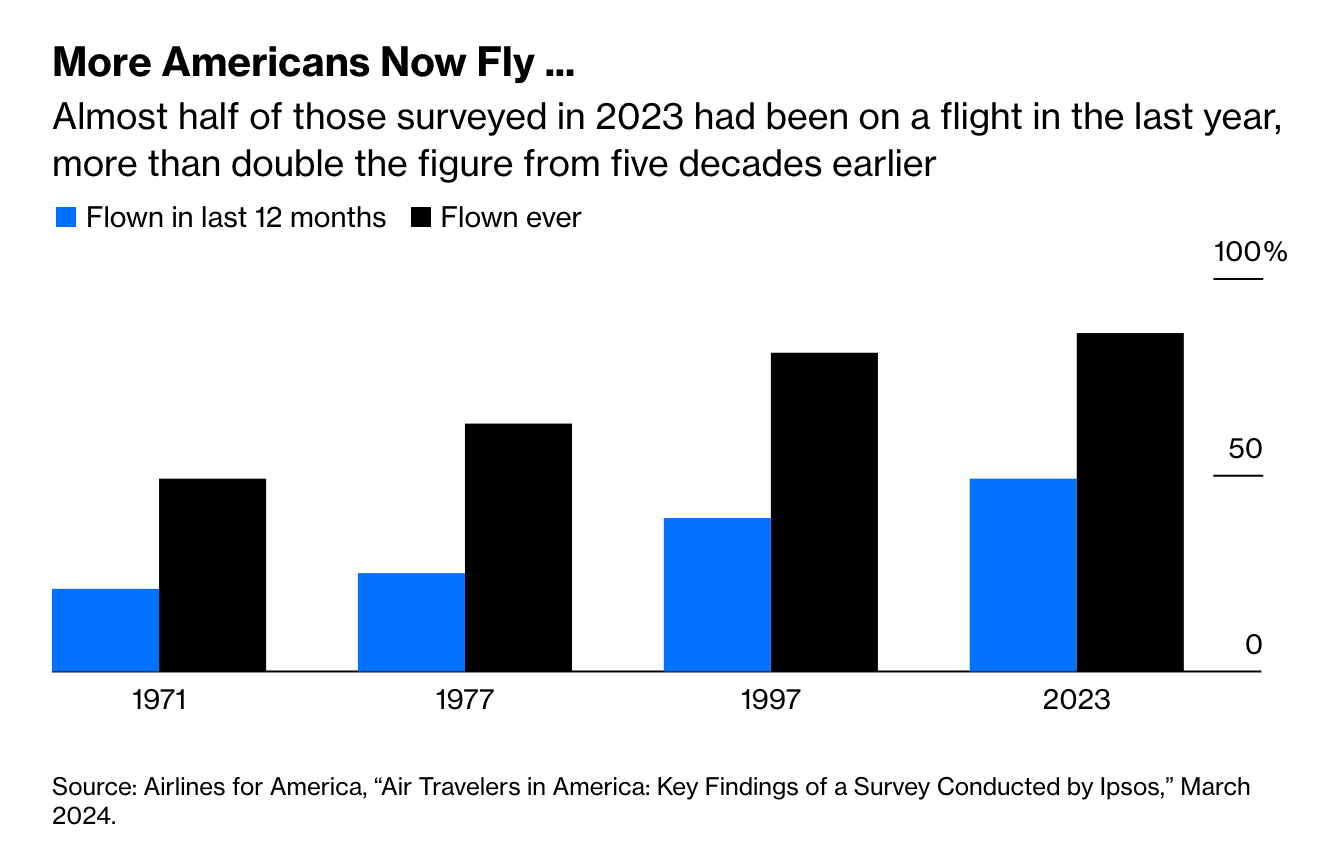
But then, after deregulation, more transparent pricing, and people just getting richer, many more people fly. But flying also got worse. In an attempt to keep fares low, seats got smaller, closer together, and airlines unbundled services. Business class overseas also got much better and stayed expensive, further subsidizing the lower fares.
So we end up all better off because we are on the plane and get to take the family to Florida a few times a year. No one is forcing us to do that. But the flying part is unpleasant, and someone else has it better; they are right in front of you, and that causes resentment, even if they helped pay for your trip. And now there are new fare categories for business class too. You get a flatbed, can’t pick your seat, and are shut out of the fancy lounge. Expect more resentment among the top 5%.
I am not sure what the solution here is. If we make flying better for the masses, that means fewer people can afford to fly. And more people flying is better on balance, even if it creates class war. When it comes to the wider economy, it seems like people are really mad about the conditions on the plane, but they don’t realize all their solutions will only mean we don’t fly at all.
Odds are, in the coming years, the income distribution will widen further as technology remakes fortunes and destroys some human capital. We have a choice of how much redistribution we want to do. Europe will do more, attempt to equalize and reduce uncertainty, while also eliminating upside. This is the case now: it is easier to enter the middle class, but becoming rich is very hard. In America, becoming very rich is not easy, but it is more likely. This is the result of the differences in our tax system and regulatory environment. What’s better? It depends on your values. But it is worth noting that being middle class in Europe is not that great, because living standards are higher in America.
GDP is great
There are two things people say about economics that drive me crazy. One is that people aren’t rational (never thought of that!). The other is GDP is terrible and we need to stop using it as our primary economic statistic. I wrote a column to give GDP—the most loathed but most important statistic—some love.
It does not capture everything that matters in an economy, but it does capture almost everything that does. It captures that we are all on the plane, but not my resentment that they only give ice cream to full-fare passengers. But the fact that I am on the plane is probably more important—even if I am unhappy watching someone else eat ice cream.
As we pursue more policies that aim to reduce growth—and yes, that is their goal—GDP is what will first alert us that things aren’t working. So that is why so many politicians are hating on GDP lately: it reduces their accountability.
Though people don’t need a statistic to know the economy is not growing.
So is the 401(k)
I also want to stand up for the 401(k). There is a cottage industry trashing it, but it is also pretty incredible. Some of it is luck—it happened to produce an unprecedented increase in stock ownership right before one of the best stock runs in history. About 20% of American households are now millionaires. Including this Costco cashier! He didn’t do anything extraordinary, just dutifully contributed to his account and invested it in a diversified stock portfolio. That’s amazing—one of the more successful economic policies in modern history.
Now, of course, the market may not be so great in the future. We can offer better risk strategies within the plan. 401(k) saving may have also displaced other forms of saving. But the increased stock participation was remarkable and a big reason why Americans are much richer today.
The Yen not so much
The whole MMT thing was always crazy to anyone with a passing knowledge of money or fixed-income markets. But their believers always said—look at Japan. They have lots of debt and low interest rates. All you need to do is practice extreme financial repression and ensure interest rates (across the whole curve!) never go up.
There are so many problems here. We live in an age where the people who claim we don’t listen enough to experts pick experts with no expertise, and this is a big example. Now, obviously, bonds are the foundation of risk and risk pricing in financial markets. If you mess with them too much, you end up with capital going to all the wrong places and less growth (Japan for the last few decades). But also, you can’t repress forever.
The yen keeps depreciating no matter how much Japan or even the US Treasury tries to support it, because it is obvious this can’t go on anymore. Markets are done with repression. Maybe the US shouldn’t try it either.
In other news
Until next time, Pension Geeks!
Allison
I’ve never fully understood the yearning for stereotypical pensions by people trashing the 401k. It means that your employer, who controls your wages, also controls your income in retirement because of the choices they make over your 40 years of work. If they make crappy decisions wrt investments, you get punished.
"Make them use Greyhound".