

Photo by Leon-Pascal Jc on Unsplash
Hello,
Welcome to Known Unknowns, a newsletter that is happy that interest rates are getting back to a more honest and healthy place.
Duration earns its term premium
Now I have been a bond doomer long before it was fashionable, or some would say necessary. But I am not yet vindicated even with rising rates. So I wrote about a few things I understand about long-term bond markets for Bloomberg to guide us through these turbulent and confusing times.
Now, I love long-term bonds no matter what price they are. If you are a Pension Geek, valuing long-term liabilities is your thing. Also, I was at one point a macroeconomist, and in the long end lies lots of (testable!) macro—where people expect inflation to go, growth expectation, the risk around that, and fiscal capacity. I love bond prices and love them even more when they do weird things and especially when they do normal things people think are weird. So this is an exciting moment for me, even if it may be a precarious moment for financial markets.
A few things to understand. First, the low rates of the 2010s were weird. It is probably not happening again anytime soon. Bond yields reflect things like the fact that the future is uncertain and that we value the present more than the future. That doesn’t change. In that way, bond yields mean revert or move around a long-term average—and that average was never near zero. Rates may diverge from it for decades, but they go back. Sometimes the return to normal is endogenous: if rates do go that low, it is not sustainable—because it invites more risk-taking and leverage, and so the world gets riskier and yields rise. Other times it is exogenous. But it happens, and it is happening in all rich countries right now.
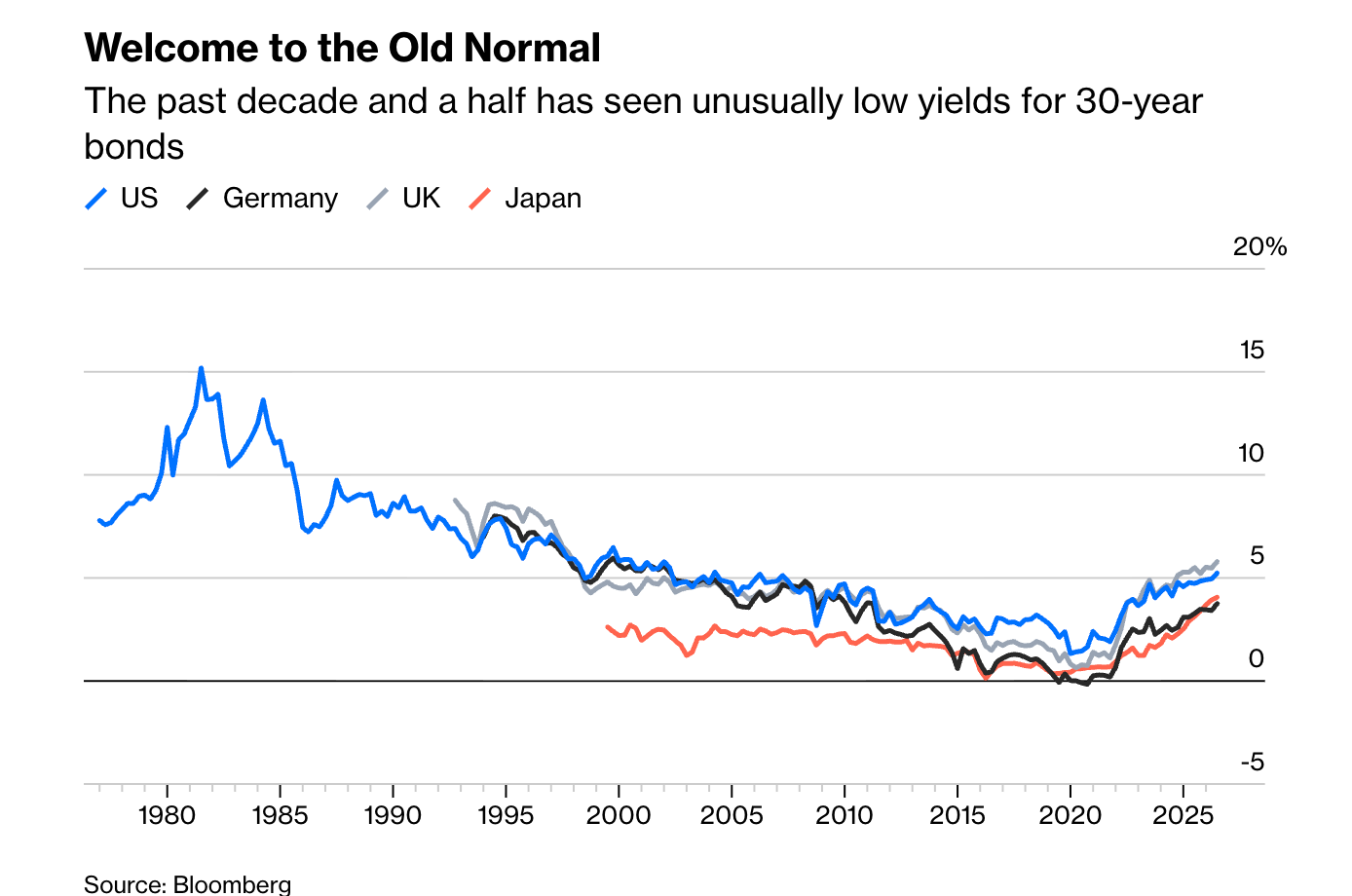
Also, long-term yields are market prices. Japan convinced people you can just pick long-term yields, and maybe you can for a while, but at great cost. Look at where they are now. Maybe yield curve control will work for a bit, but not forever. Also, the US government owes lots of long-term liabilities: pensions and future services to an aging population. Shortening our duration by borrowing short to buy long-term bonds is not prudent.
Now we may be in for a rocky period as the economy adjusts to higher rates. Some of the increase in the term premium reflects a good economic outlook and investment opportunities. But as we hit a maturity wall and possibly some fiscal issues, things could get gnarly for a bit. But in the end, risk prices might make sense again.
Long-term yields are the foundation of risk for the whole economy—mess with them at your own risk.
German pensions accept reality
German pensions are investing in equities and maybe private assets! I never thought I’d see the day. I recall my first job out of grad school where I spent many hours with two German actuaries, Horst and Wolfgang. I tried to convince them to invest a German DC plan in stocks—or just make it an option. They thought I was nuts, and I lost the argument. They explained the problem was that stocks might fall and German savers couldn’t handle that. To be fair, the pension fund had to guarantee no one would ever lose money. Which means no pension offered risky assets, but I was struck by the cultural divide on risk.
Well, it turns out the risk of stocks falling also means they go up sometimes, and German pensions have missed out on a pretty good run. Oh, and Germany has a shrinking population, which means they need non-zero returns from somewhere. There are three things you can do to get more money to pay for retirement:
Work more years (clearly out)
Save more (Germany already saves a lot)
Take more risk
So here come major pension reforms that steer people to riskier assets.
And they are not alone: over the next decades, we’ll see Europeans realize the solution to their problems is the last thing they want to do—they must take on risk.
Is Gen Z just bad at investing?
Gen Z may not be buying homes (to be honest, who should in their 20s?), but they do have much more financial wealth. And that’s great. They have more wealth than any other generation at that age, even after accounting for debt. Lots of that is in retirement accounts. But they also invest their liquid wealth—not well.
Many invest in single stocks or see betting markets, sports gambling, and crypto as reasonable long-term investments. How did we fail them? True, young men in particular are wired to take outsize risks. And every generation tends to pile into something silly; they lose their shirt, learn their lesson, and settle into reasonable investing.
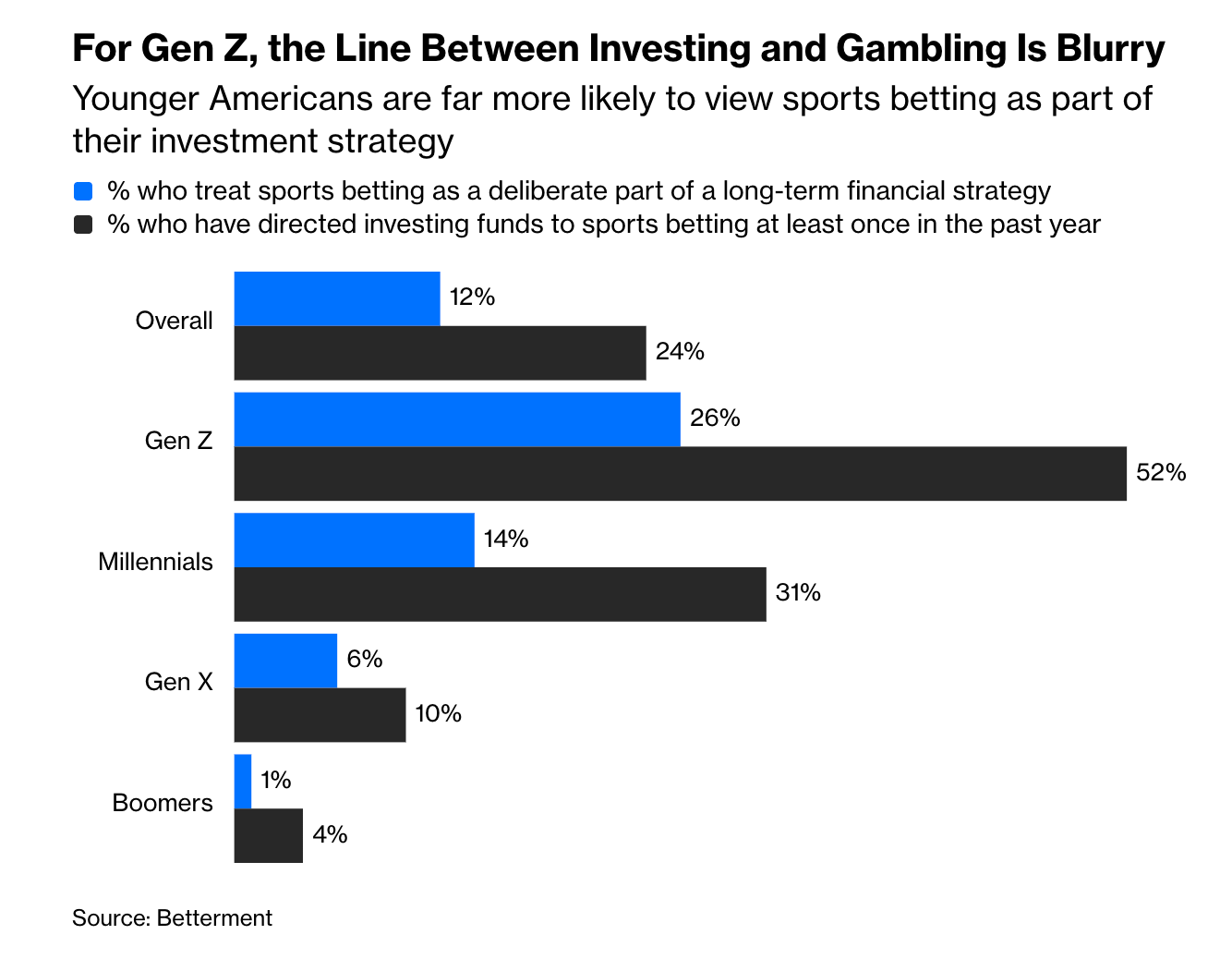
But sports gambling?! They’ve got to know that’s zero-sum and not in their favor. We can blame technology that makes it too easy and a flawed regulatory environment. I also wonder if it is bad risk literacy. We deprived this generation of reasonable risk-taking; they did bear the brunt of the pandemic and extreme helicopter parenting. Those were the years they were supposed to be experimenting and learning how to take risks. There is more coming on this in the new book, out in a few weeks!
A few other thoughts
Does Slovenia have the secret to happiness, and it’s its low expectations?
My take on the Warsh speech: discretion for now, rules when we figure it out. He may soon discover the beauty of forward guidance is that you can say you’ll make the hard decisions in the future, but not now.
Until next time, Pension Geeks!
Allison
Can't repete this too many times:
"Forward guidance" about instrument moves is bad because they should be data dependent.
"Forward guidance" about targets is good because it allows efficient planning.
Gen Z buys crypto in part because they see equity values as being contingent on "money printing" and therefore not really that different an asset in practice. By the time Gen Z is ready to buy stocks, it'll be in the bust when they'll be cutting 401k contributions to buy suddenly affordable homes.